
You drink chamomile tea every night, yet your sleep has barely changed. Maybe the tea is fine and the dose is the problem.
Dried chamomile flowers contain about 0.8% to 1.2% apigenin, the plant compound most linked to chamomile's calming reputation. Your mug does not hold anywhere near that much, though. That gap is why more people are looking at an apigenin supplement instead of another box of teabags.
This guide puts real numbers on both options. If you want a quick recommendation first, the Longevity Box Product Finder can help you build an evening routine.
Key Takeaways
-
A cup of chamomile tea gives you a few milligrams of apigenin at most. A typical apigenin supplement gives you around 50 mg in one capsule.
-
Dried chamomile flowers contain roughly 0.8% to 1.2% apigenin, but hot water pulls out only part of it.
-
Most of the apigenin in tea is bound to a sugar (apigenin-7-glucoside), not free apigenin.
-
Estimates for normal diet intake sit between 0.45 mg and 5 mg a day.
-
There is no official UK daily dose. Human research is small, and most trials used whole chamomile extract, not pure apigenin.
-
Tea is a gentle bedtime habit. A supplement suits people who want a set, measured amount.
-
Check with your GP or pharmacist first if you take blood thinners or sedatives, are pregnant or have a hormone-sensitive condition.
What Is Apigenin and Why Do People Take It?
Apigenin is a natural flavonoid found in chamomile, parsley, celery and some herbs. It is the compound behind much of chamomile's traditional use for relaxation and sleep.
People usually take it for three reasons:
-
To wind down in the evening.
-
To support a calmer response to everyday stress.
-
To go beyond what tea alone provides.
Keep expectations realistic. Research is early, and results vary from person to person.
How Much Apigenin Is in a Cup of Chamomile Tea?
A cup gives you very little compared with the flowers themselves. Most estimates put total apigenin from a normal diet at 0.45 mg to 5 mg a day, and tea sits inside that range.
Here is the maths. A teabag holds roughly 1.5 g of dried flowers. At 1% apigenin, that is about 15 mg in the dry material. Hot water then extracts only a fraction of it, and no lab figure is standard across brands. Treat any exact "mg per cup" claim with caution.
Why does the amount vary so much?
Several factors change your apigenin chamomile dose from one cup to the next:
-
Flower quality. German chamomile is known for higher apigenin levels.
-
Steeping time. Five minutes covered extracts more than a quick dunk.
-
Water temperature. Very hot water may break down some compounds.
-
Bag vs loose flowers. Loose flowers usually contain more plant material.
What form of apigenin does tea contain?
Tea contains low levels of free apigenin but higher levels of apigenin-7-glucoside. Your gut has to convert it, which is one reason absorption from tea is modest.
How Much Apigenin Is in an Apigenin Supplement?
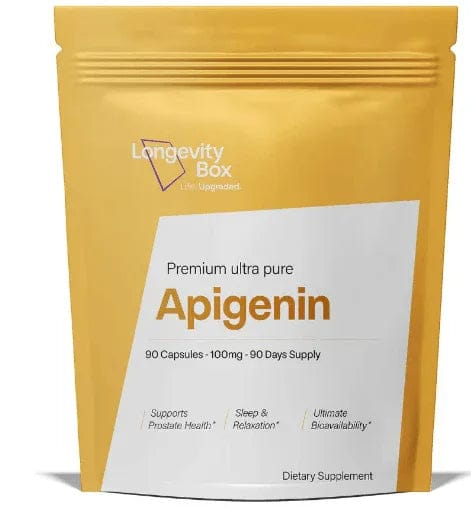
Most capsules contain 50 mg or more of apigenin, taken as a single dose. Some brands offer 100 mg. That is many times what a normal cup gives you.
Here is a rough picture:
-
Chamomile tea: a few milligrams at most, and it varies.
-
Standard capsule: 50 mg.
-
High-strength capsule: 100 mg.
What does apigenin powder dosage look like?
Apigenin powder dosage is harder to get right than it sounds. A 50 mg dose weighs 0.05 g, and a kitchen scale cannot measure that accurately. You would need a milligram scale.
Capsules solve this. Each one holds a fixed amount, so you avoid guessing. For most people, capsules are the safer route.
Is absorption a problem?
Yes. Apigenin dissolves poorly in water and is unstable on its own. Bioavailability is low whichever form you use, so more milligrams does not always mean more in your blood.
Chamomile Tea vs Apigenin Supplement: Which Gives You More?
A supplement gives you far more apigenin, and a far more predictable amount. Tea gives you a ritual, warmth and a little apigenin.
|
Feature |
Chamomile tea |
Apigenin supplement |
|
Apigenin per serving |
A few mg at most |
Around 50 mg or more |
|
Consistency |
Varies by brand and brew |
Fixed per capsule |
|
Main form |
Apigenin-7-glucoside |
Usually isolated apigenin |
|
Extra benefits |
Warm drink, routine |
Convenience |
|
Typical cost |
Low |
Medium |
|
Best for |
Gentle daily habit |
Measured, higher dose |
Want to talk it through? The Longevity Box team is happy to answer questions in a confidential chat. Call 01789 576 013 or use the contact page.
How Much Apigenin Per Day Is Reasonable?
There is no official answer. The UK has no set reference intake, and human studies are too few to give a firm range. How much apigenin per day you take should be a cautious, informed choice.
What we can say:
-
Food and tea alone provide roughly 0.45 mg to 5 mg a day.
-
Many supplements start at 50 mg once a day.
-
Small trials tested chamomile extract, not pure apigenin. One trial in adults with insomnia used an extract with at least 2.5 mg of apigenin.
Start low and stay consistent for a few weeks. Many people take it in the evening, around 30 to 60 minutes before bed.
Who should be careful?
Speak to your GP or pharmacist first if any of these apply:
-
You take blood thinners such as warfarin, or sedatives.
-
You are pregnant or breastfeeding.
-
You have a hormone-sensitive condition.
-
You are allergic to daisies, ragweed or other plants in that family.
Stop and seek advice if you notice drowsiness that lingers into the day, rashes or stomach upset.
Should You Choose Tea or a Supplement?
It depends on what you want from your evening. Use this table as a starting point.
|
Your situation |
Better fit |
Why |
|
You enjoy a calming ritual |
Chamomile tea |
Warm, low risk, easy |
|
You want a measured dose |
Supplement |
Fixed milligrams |
|
You travel often |
Supplement |
No brewing needed |
|
You are on medication |
Ask your GP first |
Interactions are possible |
|
You want both |
Tea plus capsule |
Ritual and dose together |
Take Sam, a 38-year-old teacher who drinks two cups every night. Her tea is pleasant, but she wants something more consistent. She keeps the tea for the routine and adds a capsule after checking with her pharmacist.
Sleep also depends on the basics. Many people pair evening habits with the Longevity Box Magnesium Complex.
What Makes the Best Apigenin Supplement?
The best apigenin supplement shows its dose clearly, proves its purity and keeps the label short. Marketing claims matter less than what is printed on the back.
Use this checklist:
-
Exact dose per capsule. Look for milligrams of apigenin, not a vague herbal blend.
-
Third-party batch testing. Ask to see a certificate of analysis.
-
No fillers or binders. They add bulk and nothing else.
-
Clear source. The label should say whether it comes from chamomile.
-
A real guarantee. A fair refund policy shows confidence in the product.
Longevity Box works to this standard across its range. Every product follows an "Actives Only" rule with zero fillers or binders. Batches are independently tested and covered by a 700-Day Purity Guarantee and a 60-day money-back guarantee. You can read more on the Longevity Box Purity Standard page.
How much does it cost?
Prices vary by brand and strength. As a rough monthly guide in the UK:
-
Chamomile tea: about £2 to £5.
-
Apigenin supplement: about £10 to £25.
Compare cost per serving, not per bottle. Longevity Box offers free UK shipping on orders over £50.
This article is for information only and is not medical advice. Please have a qualified healthcare professional review it before you act on it. Supplements do not replace a balanced diet or good sleep habits.
Ready to compare your options? Try the Longevity Box Product Finder or call 01789 576 013 for a confidential chat.
Explore Pure Apigenin Supplement
FAQs
How much apigenin is in one cup of chamomile tea?
A few milligrams at most, and the amount varies by brand and brew. Dried flowers contain about 1% apigenin, but hot water extracts only part of it.
Is an apigenin supplement stronger than chamomile tea?
Yes, in terms of milligrams. A single capsule usually holds 50 mg or more, far above what one cup provides.
How much apigenin per day should I take?
There is no official UK guideline. Many supplements start at 50 mg a day, but you should check with your GP or pharmacist first.
When is the best time to take apigenin?
Most people take it in the evening, around 30 to 60 minutes before bed. Stop if you feel drowsy the next morning.
Can I take apigenin and drink chamomile tea together?
Generally yes, because the tea adds very little apigenin. Still, mention both to your pharmacist if you take other medication.
Is apigenin powder better than capsules?
Not for most people. Powder is hard to measure at 50 mg without a milligram scale, whereas capsules give a fixed dose.
What are the side effects of apigenin?
Drowsiness and stomach upset are the most reported. People allergic to daisies or ragweed may also react to chamomile-based products.
How long does an apigenin supplement take to work?
Some people notice a difference within days, while others need a few weeks. Effects are usually subtle and vary between people.
Is It Time to Look Beyond the Tea Bag?
Chamomile tea is a lovely way to end the day, but it will not deliver a supplement-sized dose. If you want a measured amount, an apigenin supplement is the more reliable route.
Choose a brand that publishes its testing and keeps its label clean. At Longevity Box, every batch is independently tested and backed by the 700-Day Purity Guarantee, with a 60-day money-back promise on top.
Explore the Longevity Box blog for more guides, or call 01789 576 013 to talk to the team.
