
Most supplements work on a simple logic: take it daily, keep levels topped up, and consistency drives results. Senolytic supplementation doesn't follow that logic, and treating it like a daily multivitamin misses the actual mechanism researchers have spent the last decade studying.
Senescent cells, the "zombie" cells that stop dividing but refuse to die, don't reappear the moment a senolytic clears out. They take weeks to reaccumulate. That single biological fact is why senolytic protocols in published research look nothing like a typical supplement schedule.
This guide breaks down how continuous and pulsed dosing actually differ, what real clinical trials have used, and why the answer to "how often" matters more here than with almost any other supplement category.
Key Takeaways
-
Senolytic supplementation works differently from most supplements. Because senescent cells take weeks to reaccumulate once cleared, senolytics don't need daily dosing to have an effect.
-
This is called the "hit-and-run" mechanism, a term used directly in the foundational senolytics research from Kirkland and Tchkonia, describing how a short exposure can trigger senescent cell clearance that persists for weeks afterwards.
-
Most published senolytic protocol designs, including Mayo Clinic-led human trials, use short dosing bursts, typically two to three consecutive days, followed by an extended break of two to four weeks before repeating.
-
A common fisetin dosing schedule used in clinical research is roughly 20mg/kg for three consecutive days, repeated every 28 days, rather than a daily maintenance dose.
-
How often to take senolytics isn't governed by the same "more consistency is better" logic that applies to vitamins or minerals, since continuous dosing doesn't match how the underlying biology actually clears senescent cells.
-
Pulsed dosing senolytics appears to reduce cumulative exposure and potential side effects compared with daily use, while still achieving the intended senescent cell clearance.
-
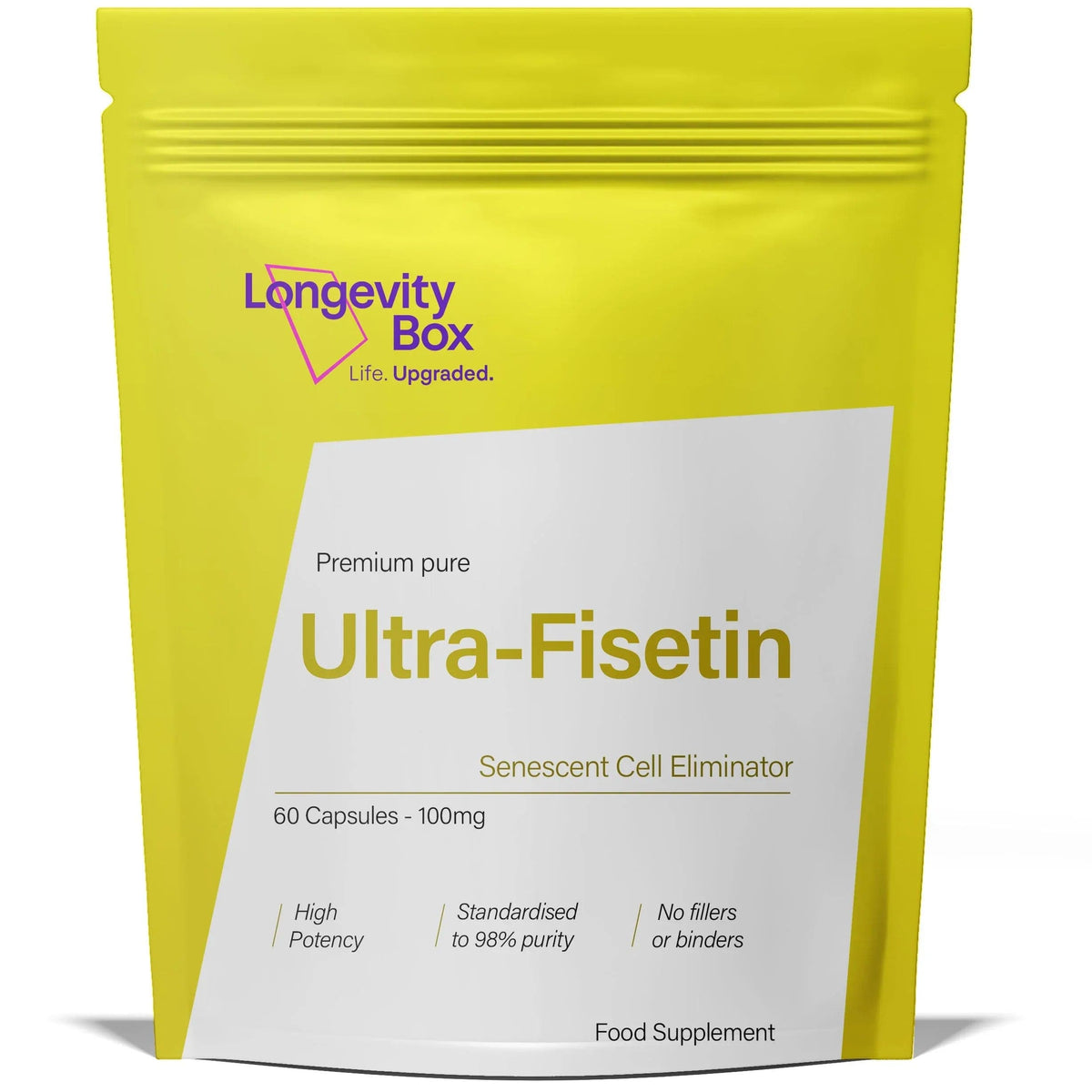
Longevity Box's Ultra-Fisetin delivers a high-purity, clinical-grade dose per capsule, giving you the flexibility to structure a protocol, continuous or pulsed, based on current research and guidance from a healthcare practitioner.
What Is Senolytic Supplementation, and How Is It Different From Other Supplements?
Senolytic supplementation refers to using compounds, such as fisetin or quercetin, that selectively trigger the death of senescent cells without harming healthy ones.
Why can't senolytics be dosed like a standard vitamin?
Most supplements support an ongoing biological process, so their effect fades once blood levels drop, which is why daily dosing keeps things topped up. Senolytics work differently. They target senescent cells' anti-apoptotic defences directly, and once those cells are cleared, the benefit persists independently of whether the compound is still present in the bloodstream.
A few defining features of senolytics as a category:
-
They target senescent cell anti-apoptotic pathways (SCAPs), rather than acting through a general antioxidant or metabolic effect
-
Their effect outlasts their presence in the body, unlike most nutrients
-
Fisetin, tested across a panel of flavonoids, was identified as the most potent natural senolytic in the foundational Mayo Clinic study published in EBioMedicine
What Is the "Hit-and-Run" Mechanism?
The "hit-and-run" mechanism describes how senolytics can produce a lasting effect from a short burst of exposure, rather than requiring sustained presence in the body.
Why does a short exposure have a long-lasting effect?
Once a senolytic disables a senescent cell's defence mechanisms, that cell dies. It doesn't come back. New senescent cells do eventually accumulate again, but this process takes weeks, not days, which is exactly why researchers describe senolytics as something you can "hit" briefly and then leave alone.
This is explicitly stated in the senolytics literature. Kirkland and Tchkonia's review notes that because senescent cells take weeks to reaccumulate, senolytics can be administered intermittently, giving them a practical advantage over senomorphic compounds, which need continuous treatment to keep working.
What Does a Pulsed Senolytic Protocol Actually Look Like?
A pulsed senolytic protocol typically involves a short dosing window, followed by a much longer break before the cycle repeats.
What dosing pattern has actually been used in human trials?
Several published and registered clinical trials give a concrete picture of what this looks like in practice:
-
A Mayo Clinic-led trial on skeletal health used fisetin at roughly 20mg/kg/day for three consecutive days, repeated every 28 days, across five total dosing periods over 20 weeks
-
The same trial's dasatinib plus quercetin arm used dasatinib for two days plus quercetin for three consecutive days, also repeated every 28 days
-
An osteoarthritis trial combined quercetin and fisetin for three consecutive days every three weeks, over a 15-week period
-
A pulmonary fibrosis pilot study used intermittent dasatinib plus quercetin for three weeks, with physical function assessed five days after the final dose
The consistent thread across these protocols is a short, concentrated dosing window followed by a substantial break, not daily, uninterrupted use.
What Does the Research Say About Fisetin Dosing Schedules Specifically?
A fisetin dosing schedule used in registered research typically involves short, repeated bursts rather than an ongoing daily regimen.
How does the research dose compare with a standard supplement dose?
The Mayo Clinic skeletal health trial dosed fisetin at approximately 20mg/kg/day, delivered across three consecutive days per cycle, for five cycles spaced 28 days apart. That's a considerably higher, more concentrated dose than a typical daily maintenance amount, administered in short bursts rather than spread thin across every day of the month.
A few things worth understanding about why this pattern was chosen:
-
Intermittent dosing was selected specifically to improve tolerability compared with sustained dosing
-
Shorter exposure windows may reduce the risk of drug interactions and side effects
-
The gap between dosing periods reflects how long researchers estimate it takes for senescent cells to meaningfully reaccumulate
Continuous or Pulsed: Which Approach Makes More Biological Sense?
Pulsed dosing aligns more closely with how senolytics actually work biologically, while continuous dosing reflects habits borrowed from unrelated supplement categories.
Does daily use of a senolytic actually provide extra benefit?
Not according to the mechanism researchers have described. Since the effect comes from clearing existing senescent cells rather than maintaining a steady blood concentration, daily dosing doesn't necessarily translate into a proportionally larger benefit. It may simply mean more total exposure to the compound without additional senescent cell clearance to show for it.
|
Approach |
How It Works |
What Research Supports |
|
Continuous (daily) |
Steady, ongoing exposure |
Common in general wellness use, but not how major clinical trials have dosed senolytics |
|
Pulsed (intermittent) |
Short bursts, then an extended break |
Reflects the "hit-and-run" mechanism and the dosing pattern used across published trials |
Longevity Box's own Ultra-Fisetin label recommends one capsule daily, which suits people who prefer a simple, consistent routine. That said, current senolytics research gives a clear rationale for structuring a pulsed protocol instead, and this is genuinely worth discussing with a healthcare practitioner who can help tailor a schedule to your specific goals.
How Often Should You Take Senolytics?
How often to take senolytics depends on which protocol you're following, but published research consistently points toward periodic, short-burst dosing rather than daily use.
What's a reasonable starting point if I want to follow a pulsed protocol?
Based on the dosing patterns seen across registered trials, a pulsed approach commonly involves:
-
A short dosing window, typically two to three consecutive days
-
An extended gap between cycles, often three to four weeks
-
Repeating the cycle periodically, rather than continuing indefinitely without a break
This structure isn't a rigid formula everyone should follow without guidance. It reflects the general shape of protocols used in published research, and individual factors, health status, goals, and any medications, should always be discussed with a healthcare professional before starting.
Frequently Asked Questions
Is it safe to take fisetin every day instead of following a pulsed protocol?
Longevity Box's Ultra-Fisetin is labelled for daily use, and many people follow this simple, continuous approach. Current senolytics research, however, points toward intermittent dosing as the pattern most consistent with how senescent cells are actually cleared, so it's worth discussing which structure fits your goals with a healthcare practitioner.
What does "hit-and-run" actually mean in senolytics research?
It describes how a brief exposure to a senolytic can trigger lasting senescent cell clearance, since the effect doesn't depend on the compound remaining in the bloodstream. This term comes directly from foundational senolytics literature by Kirkland and Tchkonia.
How long does the effect of a senolytic dose typically last?
Because senescent cells take weeks to reaccumulate, the effect of a short dosing period can persist well beyond when the compound has cleared the body, which is the basis for intermittent, rather than daily, dosing in most published protocols.
What fisetin dose have clinical trials actually used?
A Mayo Clinic-led trial used approximately 20mg/kg/day of fisetin for three consecutive days per cycle, repeated every 28 days over a 20-week study period, rather than a smaller daily maintenance amount.
Does Longevity Box sell a pure, high-dose fisetin suitable for building a pulsed protocol?
Yes. Longevity Box's Ultra-Fisetin is formulated as a high-purity, clinical-grade dose per capsule, free from binders, fillers, preservatives or additives, making it suitable for structuring either a continuous or pulsed approach.
Should I combine fisetin with quercetin, as some research trials have done?
Some published trials use dasatinib plus quercetin, others use fisetin on its own, and Longevity Box offers a dedicated comparison of fisetin vs quercetin to help you understand how each compound differs before deciding on a combination.
Is pulsed dosing genuinely safer than continuous dosing, or just theoretically different?
Researchers running these trials have stated that intermittent dosing was chosen specifically to improve tolerability and reduce the likelihood of drug interactions compared with sustained daily dosing, though this reasoning applies most directly to the pharmaceutical arm (dasatinib) of combination trials rather than fisetin alone.
