
Broccoli's reputation as a healthy food rests almost entirely on one compound: sulforaphane. What most people don't realise is that fresh broccoli barely contains any of it. What it contains instead is glucoraphanin, an inert precursor sitting in wait, and unless something triggers the conversion, most of that potential stays locked away and passes straight through the body unused.
That "something" is an enzyme called myrosinase. Without it, glucoraphanin has nowhere to go. This single detail is quietly the difference between a sulforaphane supplement that does something measurable and one that mostly ends up in the toilet. A randomised clinical study comparing the two approaches found bioavailability more than doubled when myrosinase was added alongside glucoraphanin, jumping from 18.6% to 39.8%.
This guide explains exactly why myrosinase matters, what the research actually shows, and how to check in under two minutes whether the sulforaphane tablets sitting in your cupboard are doing their job. Longevity Box's Active Sulforaphane capsules were built around this exact research, pairing broccoli seed extract with mustard seed myrosinase to deliver 8.8mg of already-converted sulforaphane per serving.
Key Takeaways
-
Broccoli and its extracts don't actually contain much active sulforaphane. They contain glucoraphanin, an inactive precursor that only converts into sulforaphane with the help of an enzyme called myrosinase.
-
Without added myrosinase, that conversion depends entirely on gut bacteria, and a clinical study found average bioavailability sat at just 18.6%, with huge variation between individuals.
-
Adding myrosinase enzyme from mustard seed to a glucoraphanin extract more than doubled bioavailability in the same study, to 39.8%, and more than tripled the conversion happening in the first eight hours.
-
Activated sulforaphane simply means the glucoraphanin-to-sulforaphane conversion has already been triggered inside the capsule, rather than left to chance once it reaches your gut.
-
Checking whether your sulforaphane tablets actually contain myrosinase is a two-minute label check, and it's one of the biggest differentiators between a supplement that works and one that mostly passes through unconverted.
-
Longevity Box's Active Sulforaphane capsules combine broccoli seed extract with mustard seed myrosinase specifically because of this research, delivering 8.8mg of already-converted sulforaphane per serving.
What Is Myrosinase, and Why Does Sulforaphane Need It?
Myrosinase is the enzyme that breaks glucoraphanin apart and releases sulforaphane, and without it, glucoraphanin simply stays inactive as it moves through your digestive system.
In an intact broccoli plant, glucoraphanin and myrosinase are stored in separate compartments of the plant cell, kept apart on purpose. Chewing, chopping, or crushing the plant ruptures those cell walls and lets the two come into contact. That contact is what plant biologists call the "mustard oil bomb," a defence mechanism crucifers evolved to deter animals from eating them. The same reaction that once protected the plant is exactly what a body needs to unlock sulforaphane from it.
A few things worth knowing about this enzyme:
-
Myrosinase is heat-sensitive. Cooking broccoli, especially boiling it, destroys much of the plant's own myrosinase before it ever gets the chance to work.
-
Extraction and encapsulation processes used to make supplements can also strip out native myrosinase entirely, leaving a glucoraphanin-only product.
-
Mustard seed contains a particularly resilient form of myrosinase, which is why it's commonly added back into broccoli-based supplements as an external source.
Glucoraphanin vs Sulforaphane: What's the Actual Difference?
Glucoraphanin is the raw material. Sulforaphane is the finished, bioactive compound. Confusing the two is one of the most common mistakes people make when comparing supplements.
|
Glucoraphanin |
Sulforaphane |
|
|
What it is |
An inactive glucosinolate precursor |
The bioactive isothiocyanate compound |
|
Found where |
Naturally high in broccoli seeds and sprouts |
Formed only after conversion by myrosinase |
|
Does it act on Nrf2 alone |
No, not until converted |
Yes, this is the form that activates the Nrf2 pathway |
|
What a label listing this alone tells you |
Potential, but conversion isn't guaranteed |
The compound has already been activated |
Some labels list only "glucoraphanin content" without ever mentioning myrosinase or an actual sulforaphane yield. That's a meaningful gap. A high glucoraphanin number on its own tells you almost nothing about how much sulforaphane you'll actually absorb, because that depends entirely on whether conversion happens, and how efficiently.
Can Your Gut Bacteria Do the Conversion Instead?
Yes, to a degree. Certain gut bacteria produce myrosinase-like enzymes capable of converting glucoraphanin, but the process is inconsistent, slower, and varies enormously from person to person.
A randomised, double-blind crossover study measured exactly how well this bacterial route performs compared to adding myrosinase directly. Sixteen participants received glucoraphanin from broccoli seed extract either alone, relying on their own gut bacteria, or paired with mustard seed myrosinase. The results were striking:
-
Glucoraphanin alone (gut bacteria conversion): 18.6% average bioavailability
-
Glucoraphanin plus mustard seed myrosinase: 39.8% average bioavailability, more than double
-
Conversion speed in the first 8 hours: 8.0% without added myrosinase versus 25.4% with it, over three times faster
Researchers studying this have also flagged something worth knowing: individual gut microbiome composition varies so much that some people convert glucoraphanin reasonably well through bacteria alone, while others show almost no conversion at all. If your supplement relies solely on your gut to do this work, you genuinely don't know which category you fall into.
What Does the Research Say About Myrosinase Enzyme Supplements?
Multiple independent studies, not just one, consistently point to the same conclusion: active myrosinase in a supplement significantly increases and stabilises sulforaphane bioavailability compared to glucoraphanin alone.
A few additional findings worth knowing:
-
Earlier bioavailability research found glucoraphanin preparations lacking active myrosinase delivered roughly 10% bioavailability on average, while preparations with active myrosinase included reached almost 40%, a fourfold difference.
-
Research comparing heat-processed broccoli with and without added mustard seed found the addition increased sulforaphane formation by 3 to 5 times.
-
In vitro digestion modelling has shown that pairing broccoli seed extract with mustard seed myrosinase measurably improves how much glucoraphanin actually converts during the digestive process, rather than passing through unconverted.
The pattern across this body of research is remarkably consistent. Adding myrosinase isn't a marginal tweak. It roughly doubles to quadruples how much usable sulforaphane your body actually receives from the same starting dose of glucoraphanin.
How to Check Your Sulforaphane Supplement Actually Has Myrosinase
Checking whether a sulforaphane supplement contains active myrosinase takes less than two minutes, and it's one of the most important checks you can do before buying.
Run through this quick checklist:
-
Look at the ingredients list for "mustard seed" or "mustard seed powder." This is the most common source of added, resilient myrosinase in supplements.
-
Check whether the label states an actual sulforaphane yield in milligrams, not just a glucoraphanin percentage. A product that only quotes glucoraphanin content, with no stated sulforaphane figure, hasn't demonstrated conversion.
-
Look for language like "activated," "myrosinase-activated," or "pre-converted." Reputable brands using this approach tend to state it directly, since it's a genuine formulation advantage worth highlighting.
-
Check for third-party testing or a Certificate of Analysis. A brand confident in its actual sulforaphane content will usually make batch testing data available.
-
Be cautious of products relying solely on broccoli sprout powder with no mentioned myrosinase source. Sprout powder can be a good glucoraphanin source, but without confirmed active myrosinase, conversion still depends on your own gut bacteria.
If a product's ingredients list shows only "broccoli extract" or "broccoli sprout extract" with no mustard seed, no myrosinase, and no sulforaphane milligram figure, it's worth asking the brand directly how conversion is meant to happen.
What Makes a Sulforaphane Supplement Genuinely "Activated"?
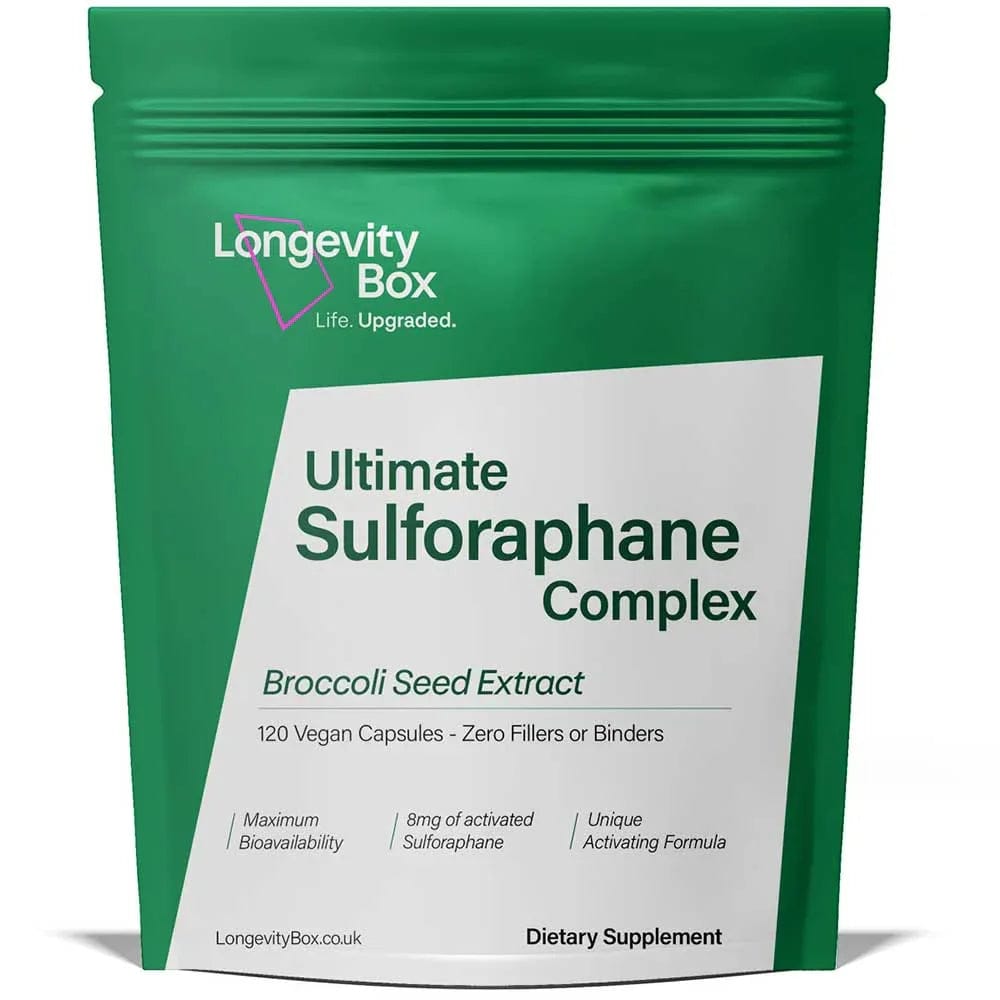
A genuinely activated sulforaphane supplement combines a glucoraphanin source with an active myrosinase source in the same formulation, so conversion has already taken place, or is guaranteed to happen efficiently, rather than being left to chance.
This is exactly the combination behind Longevity Box's Active Sulforaphane:
-
Broccoli seed extract, providing the glucoraphanin precursor
-
Mustard seed myrosinase, the enzyme that reliably drives the conversion, based on the same clinical mechanism described above
-
8.8mg of active sulforaphane per serving, stated directly rather than hidden behind a glucoraphanin-only figure
-
Independent lab testing, so the actual sulforaphane content is verified rather than assumed
-
Zero fillers or binders, formulated as an active-only capsule with nothing added to dilute the dose
This "Unique Activating Formula" approach exists specifically because relying on gut bacteria alone, as the research above shows, leaves too much to chance. Pairing glucoraphanin with its activating enzyme in the same capsule is the more consistent, evidence-backed route to genuinely bioavailable sulforaphane.
Frequently Asked Questions
What exactly does myrosinase do to sulforaphane?
Myrosinase is the enzyme that breaks down glucoraphanin, the inactive precursor found in broccoli, and releases active sulforaphane. Without it, glucoraphanin largely stays inactive as it passes through your digestive system.
Is glucoraphanin the same thing as sulforaphane?
No. Glucoraphanin is the raw precursor compound naturally found in cruciferous vegetables. Sulforaphane is the active, bioavailable compound that glucoraphanin converts into once myrosinase breaks it down.
Can my gut bacteria convert glucoraphanin without added myrosinase?
To some extent, yes, but research shows this route is inconsistent and less efficient. One clinical study found average bioavailability of just 18.6% relying on gut bacteria alone, compared to 39.8% when myrosinase was added directly to the supplement.
Why does cooking broccoli reduce its sulforaphane potential?
Myrosinase is heat-sensitive, and cooking, particularly boiling, destroys much of the plant's natural myrosinase before it can trigger conversion. This is why lightly steamed broccoli, or broccoli paired with a raw mustard seed source, tends to retain more sulforaphane potential than fully cooked broccoli.
How do I know if my current sulforaphane tablets contain myrosinase?
Check the ingredients list for mustard seed or mustard seed powder, and look for a stated sulforaphane milligram figure rather than only a glucoraphanin percentage. If neither appears, the product likely depends entirely on your gut bacteria for conversion.
Does Longevity Box's Active Sulforaphane contain myrosinase?
Yes. It combines broccoli seed extract with mustard seed myrosinase specifically to activate the glucoraphanin-to-sulforaphane conversion, delivering a stated 8.8mg of active sulforaphane per serving rather than relying on gut conversion alone.
Is a higher glucoraphanin number on a label always better?
Not necessarily. A high glucoraphanin figure without confirmed myrosinase or a stated sulforaphane yield tells you about the raw material, not how much of it your body will actually convert and absorb.
Are activated sulforaphane supplements safe to take alongside other medications?
Sulforaphane is generally well tolerated, but anyone taking prescription medication, managing an existing health condition, or who is pregnant or breastfeeding should speak with a healthcare professional before starting any new supplement.
